Main Stages and Equipment Used In Manufacturing Wood Pellet Mill
In recent years there has been continuous growth in production and use of bio fuels. There are many factors that determine this process. Among the main factors is that bio fuels are used as an alternative to traditional fuels. Besides that, being environmentally friendly, their use leads to tangible economic benefits. For a relatively short period of time, wood pellet mill captured significant market share and gained considerable credibility among consumers. Contributing to this have not a few advantages of their high calorific value, moving generally in the range 4300 – 4500 kcal / kg (5 kW / h of 1 kg), and relatively low ash content. Wood pellets used by wood pellet mills are suitable for both domestic consumption and for industry.
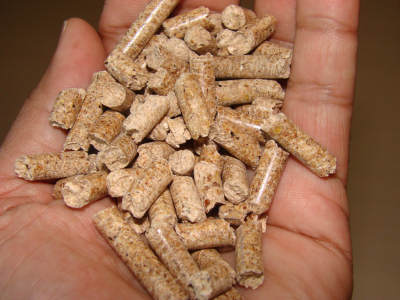
Manufacturers of heating equipment offering boilers and fireplaces designed specifically to burn pellets, characterized by very high efficiency. As a bio fuel wood pellets are clean burning and they do not emit harmful emissions. Compared with traditional fuels, their combustion are separated by 10 to 50 times less carbon dioxide, as stray equals swallowed by the plant during its growth. Pellets are manufactured in a compact size, and therefore do not create difficulties in storing and transporting them and their high density ensures the preservation of their form.
Generated during production of surface coating prevents penetration of moisture. Allowed to retain their close proximity to the heated building because they do not support self-burning. The advantage of pellets is the ability for automated submission to their incineration, where the combustion process of wood pellets has been very effective and complete.
Wood pellets are produced by wood pellet mill with standard sizes, which are obtained by extrusion molding of bark, sawdust and other wood waste. In the process of production to biomass does not require further addition of chemical adhesives. The required material to produce around one ton of pellets is usually about 4-7 m3 timber, depending on humidity and type of wood waste.